Why local DFW Multi-Family Complexes Fail Commercial Roof Audits
Across Burleson, Fort Worth, Dallas, Arlington, Plano, Frisco, and McKinney, commercial roof audits on multifamily properties flag the same failure patterns again and again. The problems are predictable, preventable, and expensive when ignored. This article explains what auditors look for on multifamily roofs in the DFW metroplex, why properties along I-35W, US 287, and SH 174 so often miss the mark, and how owners can pass the next review without emergency spend. The focus stays on inspection and maintenance discipline. That is what signals. Facility managers in 76028 and 76097 want to know what will put a roof audit in the fail column and how to reverse it before the next storm cycle.
Why this matters to Burleson and South Fort Worth asset teams
Multifamily assets in Burleson and south Fort Worth run dense roof real estate. Each building has multiple penetrations for HVAC lines, vent stacks, bathroom vents, and satellite brackets. Each of those is a leak risk. An audit failure on one building often signals a portfolio pattern. A small miss compounds across 20 buildings. A failed audit can delay insurance carrier renewals, stall capital planning, and expose owners to health and safety citations after interior moisture events. When water hits a tenant ceiling in Old Town Burleson off Renfro Street, it is never one ceiling tile. It is three units and a claims file, plus a service call that costs more than a seasonal inspection would have.
North Texas roofs take a specific beating. DFW sits in a high-frequency hail belt with roughly 8 to 12 hail events per year that produce stones at least 1 inch in diameter. Tarrant County’s 2024 and 2025 spring seasons produced some of the highest commercial claim volumes on record. Heat pushes membranes on the south and west slopes. UV drives chemical breakdown. Ponding concentrates that heat. The audit process must fit that climate. That is the purpose of .
What auditors actually grade on multifamily roofs
On multifamily complexes across Wilshire Boulevard, Hidden Creek Parkway, and the US 287 frontage, auditors do not grade brand names first. They grade condition and risk. They document the membrane type, the attachment method, the drainage design, the parapet and coping details, the edge metal, and the state of seals at every penetration. The roof system varies by project era. Older roofs are modified bitumen or built-up roofing. 2000s construction leans to TPO or PVC. Some 1990s buildings still carry EPDM roofing. Mechanical buildings use R-panel metal. A few have spray polyurethane foam with silicone coating. Each system fails in a predictable way under DFW conditions. Auditors know the signs in minutes.
Audit scope usually includes twice-annual inspection benchmarks for North Texas. Spring pre-storm and fall pre-freeze cycles are standard. A complete review includes an infrared moisture survey to locate wet insulation that looks fine to the eye, core sampling to verify assembly and measure water content, and direct inspection of drains, scuppers, parapet walls, coping caps, edge metal, curb flashing, and sealant. For metal roofs, a fastener pull-test and a check for fastener back-out matter. For single-ply roofs, a seam probe and weld test matter. That is the heart of for multifamily properties.
Five recurring reasons local multifamily roofs fail audits
Burleson and DFW multifamily assets tend to miss the same checkpoints. Not because the roofs were built wrong, but because service cycles stretch too long in a harsh climate zone. The most common fail items are straightforward. They cost less to fix in spring than they cost to manage after a June hail core passes over I-20 and I-35W.
1. Blocked drains and undersized scuppers
Multifamily buildings trap leaves, seed pods, and roofing granules behind parapets. Internal drains clog. Scuppers choke. Water ponds. Pooled water heats the membrane and accelerates failure. Modified bitumen blisters where vapor tries to escape. TPO chalks and weakens near standing water. PVC welds become stress points. Auditors fail a roof when they see a pond deeper than one quarter inch that lasts more than 48 hours. In DFW, that is a frequent sight on buildings with through-wall scuppers that never got enlarged after the first ponding complaint.
2. Parapet wall and coping movement
Parapet caps loosen under wind uplift. Spring fronts along the Trinity River corridor push gusts that find a loose joint and lift it. Once the coping moves, water tracks down the wall and behind the base flashing. Fasteners may have pulled from aging wood nailers, or the original cleat may not meet current UL 580 wind uplift targets. Auditors fail roofs for loose copings, missing splice plates, and gaps wider than a quarter inch. This is a leading cause of hidden moisture behind the top course of membrane on complexes along Alsbury Boulevard and the Burleson Commons corridor.
3. Single-ply seam degradation on south and west exposures
TPO and PVC seams fail faster along the south and west edges in North Texas. UV is punishing. Heat builds at parapet corners and near rooftop walls. A shareable data point for DFW facility teams: approximately 60 percent of TPO roofs older than 12 years in this market show measurable seam degradation along the south-facing slope, and the failure rate spikes where a walkway pad concentrates heat. EPDM roofing uses tape seams and adhesives that also age hard on sun-exposed slopes, leading to edge shrinkage and pull-back at corners. Auditors mark down chalking, heat-weld scours, seam voids, and lifted edge strips.
4. Penetration flashing and pitch pocket neglect
Multifamily buildings pile up penetrations. HVAC techs cut and reseal without roofing oversight. Sealants crack. Pitch pockets dry and sink. Prefabricated pipe boots split at the uphill corner. Every one of these points becomes a tenant call two storms later. Auditors fail roofs when they see non-roofing mastic used as primary waterproofing at a curb or boot. They also fail when units sit on wood sleepers without protection pads, which cut the membrane under thermal movement.
5. Saturated insulation undetected under intact membrane
The most common reason an audit fails in 76123 and 76134 is not visible at a glance. Saturated polyiso or EPS hides beneath intact TPO, PVC, or modified bitumen. An infrared moisture survey at dusk or dawn reveals the wet zones. Core samples confirm. Once insulation is wet, R-value collapses, energy costs rise, and rot risks follow. Portfolios that skip IR scans for years pay for partial replacements at $4 to $12 per square foot after one heavy storm season. Auditors flag any wet area that exceeds a small repair threshold, especially near drain sumps and long low-slope runs that never drained well.
Cost reality for in DFW
Inspection programs are cheap compared to emergency work orders. Typical 2026 DFW pricing for commercial roof inspection runs $0.05 to $0.15 per square foot for a single inspection depending on access and complexity. Annual preventive maintenance programs that include two inspections, drain service, minor sealant work, and a written report with photos fall in the $0.20 to $0.50 per square foot range. Portfolio asset inspections for multifamily owners often price per building, most often $300 to $800 per inspection when bundled across multiple addresses.
Audit failures that lead to repairs add cost in steps. Spot leak visits run $500 to $2,500 for a small scope. Multi-point repair runs between $1,500 and $6,000 if several buildings need attention. Partial section replacement ranges from $4 to $12 per square foot depending on membrane type, insulation replacement, and whether a cover board like gypsum or HD polyiso is required. These numbers are consistent along the I-30 and I-20 corridors from Terrell through Mesquite to Fort Worth. The math is clear. A $500 spring inspection and drain clearing can prevent a $40,000 interior water damage claim in a single thunderstorm when scuppers choke during a 2-inch downpour.
Assembly details that push pass or fail
Auditors do not care how many logos appear on the roof. They focus on system design and attachment. In climate zone 3A, positive drainage is mandatory. Tapered insulation solves more audit problems than any single material choice. Polyiso provides about R-5.7 to R-6.5 per inch. Where water sits, install tapered panels to build slope to drains and scuppers. Add sump plates at drains to eliminate birdbaths. Use a cover board to resist hail and foot traffic. Gypsum or HD polyiso spreads impact and slows puncture risk, especially near roof access paths and at HVAC corridors.
For single-ply roofs, attachment choice dictates durability. Mechanically fastened TPO or PVC systems with heat-welded seams perform well when wind decks are verified and fastener patterns match FM Approved requirements. Fully adhered systems reduce flutter noise over top-floor units and resist dirt infiltration along lap edges. Ballasted systems are rare on local multifamily roofs because of service access issues. Auditors check for FM and UL references, but the field condition is what passes or fails. Weld quality, seam probe response, and field-fabricated details at inside and outside corners matter most.
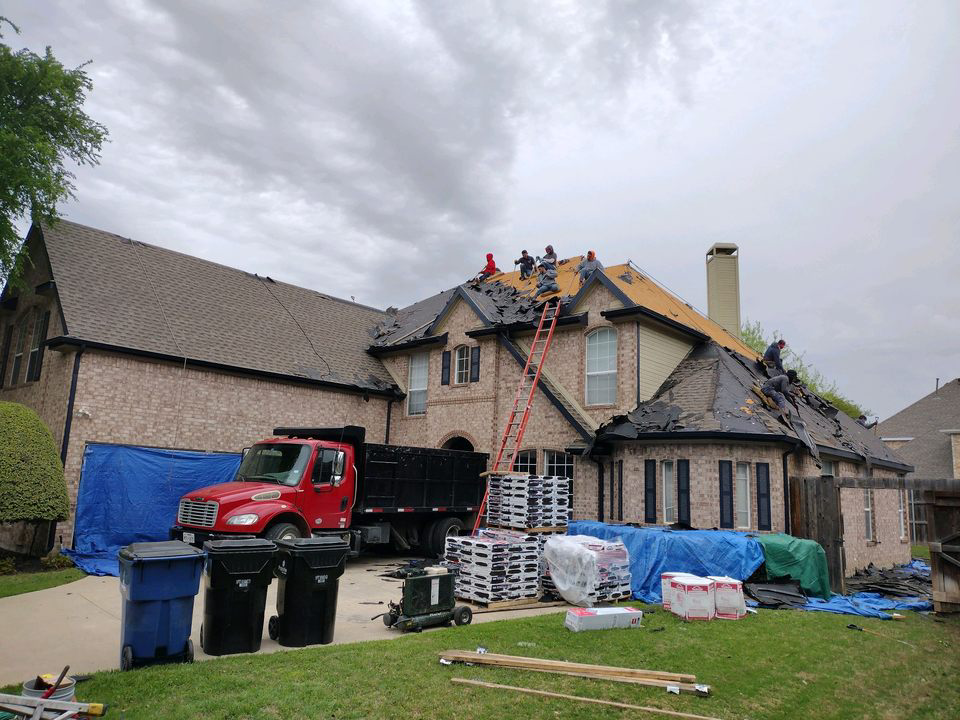
For modified bitumen, two-ply or three-ply assemblies with a granule-surfaced cap sheet hold up in DFW if plies are well bonded and transitions are formed without fishmouths. For BUR, four-ply hot asphalt systems age to alligatoring in extreme sun and become audit risks at year 20. For EPDM roofing, auditors look for shrinkage at perimeters, loose protective strips over seams, and brittle lap sealant. On metal R-panel roofs, they check for fastener back-out, failed neoprene washers, and open laps at end joints. These are standard items in checklists for multifamily properties across the DFW metroplex.
Hail, wind, and heat signatures that fail audits fast
Hail in DFW leaves a reliable fingerprint for inspectors. TPO and PVC show hail bruising where the reinforcement mat breaks under impact. EPDM roofing shows punctures and star cracks around impact points, worst near aged seams. Modified bitumen loses granules and exposes asphalt, which then weathers to crack lines. Metal panels show circular indentations and bent seams near ridge transitions. On the wind side, auditors look for lifted edge metal, displaced coping, and scoured seam edges where dust and grit sanded the weld line during high wind events along I-820 and the LBJ Freeway corridor. Heat shows up as membrane chalking, seam pull, and stress cracking at corners.
A local data point that asset managers cite: roofs older than 15 years in the DFW hail belt often qualify for full replacement after a single major event with stones 2 inches or larger, especially where insulation is saturated and cover boards are fractured. That observation drives both audit severity and insurance dialogue in 75201, 76102, 76011, and 75024. Auditors will not pass a roof with widespread hail bruise or puncture even if interior leaks have not started yet. They write it up because the next storm will exploit the damage.
Documentation that supports a pass during
An audit is more than a rooftop walk. Paperwork and photo documentation matter, especially when insurers or buyers review condition across a multifamily portfolio in Dallas, Frisco, Plano, and McKinney. The complete package proves diligence and lowers risk ratings.
- Infrared moisture survey maps with thermal images and marked test cores Core sample logs with assembly layers, membrane thickness, and moisture content Drain and scupper service records with dates and photos of cleared debris Penetration and curb flashing photo sets before and after sealant work Written repair reports with material references and locations on a site plan
Carriers want evidence that maintenance exists, not intent. A twice-annual log that shows spring and fall activity across all addresses from Burleson to Mesquite is a simple way to change how an adjuster reads risk. That log is a core deliverable inside for multifamily portfolios.
EPDM roofing on DFW multifamily: why it passes or fails
EPDM roofing still covers many 1990s multifamily buildings in south Fort Worth and older phases in Burleson. It is a durable membrane with strong hail resistance when thick enough. Common audit failures on EPDM roofing fall into three buckets. First, seam tape and lap sealant age under UV. Warm DFW summers harden adhesives. Laps peel. Second, perimeter shrinkage at the base of parapet walls pulls the membrane tight and exposes a gap at termination bars. Third, field patches age faster than the main sheet, especially where uncured EPDM or generic tape was used.
Auditors probe every lap on EPDM roofs, checking for pull-back and voids. They look for protected terminations with cover strips and plates. They read repair history. They do not penalize a roof for being EPDM. They fail it when seams, terminations, and boots lose elasticity and open. A preventive plan keeps EPDM roofing in the pass column. Annual lap reviews, new cover strips at suspect seams, replacement of cracked pipe boots, and fresh counterflashing at vulnerable walls keep a 60-mil membrane performing. Infrared scans are vital on EPDM because punctures hide well on dark surfaces.
The HVAC factor that sinks otherwise solid audits
On multifamily complexes off NE Renfro Street and near the Hidden Creek industrial park, HVAC work happens weekly through the summer. Units get swapped. Lines get moved. Curb flashing gets cut and patched in a hurry. Auditors fail roofs where curb flashings are pieced together with incompatible mastics, where mechanical stands sit without protection pads, or where new refrigerant lines cut through membrane fields without a prefabricated penetration seal. These are not small issues. Every bad curb detail is a future ceiling stain in a top-floor bedroom.
Coordination solves the problem. A rooftop permit log, a standard detail for curbs and line penetrations, and quick response to reseal after mechanical work keeps audits clean. On TPO and PVC, heat-welded patches outlast mastics. On EPDM roofing, pressure-sensitive cover strips and compatible primers extend service life. Auditors respond well to consistent detail work that matches manufacturer standards from Carlisle, Firestone, Johns Manville, Versico, and GAF.
Edge metal and coping details that make or break a pass
Edge metal failure is a top wind claim driver along the Tom Landry Freeway and the Bush Turnpike. Auditors will not pass edges that show missing cleats, unseated fasteners, or torch-burned membranes at terminations. Coping caps need splice plates, continuous cleats, and sealed joints. Where wood nailers are soft, fasteners will not bite. That is a fail. On rework, replace decayed nailers with treated lumber, install continuous cleats, and follow ANSI/SPRI ES-1 design for edge securement. Those steps can turn a marginal roof into a pass during without touching the field membrane.
Skylights and smoke vents on multifamily corridors
Garden-style complexes with corridor skylights show frequent leaks at the frame-to-membrane transition. Acrylic domes craze and crack. Fastener gaskets age. On audits in 75032 Rockwall and 75150 Mesquite, skylight perimeters and smoke vents rank high on deficiency lists. The fix is predictable. Re-seat frames, replace gaskets, reflash with compatible membrane, and add counterflashing. Audit pass rates climb when skylight frames get the same attention as drains and penetrations. On 24-building sites, this alone can clear dozens of red marks.
Why infrared moisture surveys are non-negotiable in DFW
An infrared moisture survey is the most efficient way to find hidden wet insulation on large multifamily sites along US 287 and I-35W. During spring evenings, thermal cameras pick up heat signatures where wet insulation holds warmth longer. Inspectors grid the roof, mark targets, and pull cores. Without IR, teams chase the loudest leak call and miss the broader pattern. With IR, the next capital plan is structured. Cut and replace wet zones, add tapered insulation, and reset the maintenance clock. In this market, a roof that looks fine in Plano at 3 p.m. Will fail an IR check in Arlington at 8 p.m. That is the difference between a pass and fail in comprehensive programs.
Manufacturer systems and warranty expectations
Commercial roofs that pass audits year after year are built and maintained to system standards, not to the shortest bid. TPO from GAF EverGuard, Carlisle Sure-Weld, Firestone UltraPly, Johns Manville TPO, or Versico VersiWeld performs in DFW when seams are welded right, cover boards are used at traffic areas, and edges meet ES-1. PVC from Sika Sarnafil or JM handles chemical exposure zones near restaurants. EPDM from Firestone RubberGard or Carlisle Sure-Seal stays serviceable when laps are maintained and perimeters are protected.
Warranties reflect the same logic. Properly installed TPO or PVC systems in DFW can qualify for 20 to 30 year No Dollar Limit warranties from the major manufacturers when installed by authorized applicators. The higher installation cost often pays back within a mortgage cycle by reducing service calls and interior claims. That is a shareable fact many multifamily owners across 75201 Dallas and 76102 Fort Worth use during underwriting.
Traffic management on roofs with frequent access
Multifamily roofs see more foot traffic than most retail centers because of recurring HVAC work. Audits fail where traffic crushes insulation or scuffs membrane at ladder landings. Permanent walkway pads on TPO and PVC, pavers on modified bitumen, and designated paths for service techs prevent damage. Auditors look for pad placement at hatch locations, roof-to-roof transitions, and around mechanical yards. OSHA-compliant tie-off anchors and guardrail systems support safe access and reduce off-path walking. Those details push audits into the pass column across properties from Burleson to Garland.
Why portfolios fail together in Tarrant County
Portfolios fail in clusters because maintenance contracts stop at the fence line. One contractor clears drains at Building A. None at Buildings B through F. One building gets a fall inspection; others get skipped to hit budget. On audit day, the report stacks with identical photos across the site. Drains blocked. Parapet caps loose. Lap edges chalked. The EPDM roofing installation fix is to standardize across all assets on a single calendar with the same inspection forms. DFW multifamily owners who enforce a twice-annual inspection across all addresses reduce failure rates sharply in year one. They also reduce surprise capital calls right before policy renewal.
Insurance and HB3 context during audits after hail years
After the 2024–2025 hail runs, many multifamily properties from Keller to Mansfield entered audits with open claims. Texas Department of Insurance HB3 compliance now frames contractor conduct on storm restoration. Insurers want clear, HB3-compliant documentation. That includes damage mapping, photos, Xactimate scope files, and adjuster meeting notes. Audits that integrate this documentation fare better. They show the property is managing both repair and compliance, not chasing patches without a plan.
The inspection schedule that fits DFW weather
Two inspections per year match North Texas reality. Spring inspection prepares for hail and heavy rain. Fall inspection tightens copings and seals for freeze and wind. Add a post-event check after any storm that drops greater than 1-inch hail within two miles of the site. That schedule pairs with drain maintenance and targeted sealing. The cost structure noted earlier makes this realistic for multifamily budgets. It also aligns with adjuster expectations across Arlington, Forney, Mesquite, and Rockwall.
What an auditor expects to see on-site
Beyond good roofs and clear drains, auditors look for three practical items. First, safe and controlled access, including roof hatch condition or ladder lock. Second, a visible maintenance map or site plan that marks drains, scuppers, and roof-to-roof transitions. Third, evidence that previous repair recommendations were completed. A roof that shows last season’s punch list resolved earns confidence. A roof with repeat photos of the same open lap fails. Those expectations do not change from 75126 Forney to 75160 Terrell, where SCR’s headquarters supports east-west dispatch along US Highway 80 and into Tarrant County via I-30 and I-820.
Common myths that lead to failed audits
Several beliefs persist and cause avoidable fails. One myth says ponding is fine if the roof never leaks. It is not. Ponding accelerates aging and signals poor drainage design. Another says a warranty replaces maintenance. It does not. Neglect voids coverage. A third says white TPO always passes because it runs cooler. It does not if seams are weak or drains are blocked. A final myth says EPDM roofing needs no welding so it is less complex. It is different, not simpler. Lap edge care and terminations matter just as much.
Edge cases auditors flag on multifamily sites
Multifamily properties have unique oddities. Unit patios below roofline create wall-to-roof transitions that catch runoff. Stacked pipe penetrations in mechanical chases complicate sealing. Satellite mounts drilled through membranes still appear on older sites in Crowley and Everman. Auditors mark all of these as risk points. The pass comes when details follow manufacturer standards, protective cover boards sit under high-traffic zones, and sealant-only patches are replaced with welded or fully adhered membrane patches that match the parent roof system.
Passing the next audit across a DFW multifamily portfolio
Passing is not about perfection. It is about discipline and documentation. The priority list is simple. Clear drainage paths. Tighten copings and edges. Rework penetrations with system-compatible components. Scan with infrared each spring on older roofs and any roof past a hail event. Add tapered insulation at chronic ponding zones. Standardize reports across all sites from 76028 Burleson to 75201 Dallas and 76102 Fort Worth. Tie HVAC work to a roofing touch so curbs and linesets do not degrade the membrane field. These moves shift a property from reactive spend to preventive planning, which is the heart of .
What SCR sees on the ground in Burleson and greater DFW
SCR crews see the same audit drivers from Old Town Burleson to the Dallas Galleria area near 75240. Drains and scuppers lead the fail list. Parapets come second. South-facing TPO seams come third. EPDM roofing on 1990s buildings needs perimeter resets and new cover strips. Modified bitumen at strip centers along Wilshire Boulevard cracks on sunbaked sections near parapets. Metal R-panel leaks where fasteners back out, especially along long runs near wind funnels by the Texas Motor Speedway and open fields east of I-35W. None of this is exotic. All of it fits a preventive schedule.
Local, technically grounded claim to carry forward
For DFW multifamily, the most actionable statistic is this: in SCR field reviews across Tarrant, Dallas, and Collin Counties, roughly 60 percent of TPO roofs older than 12 years show measurable seam degradation along the south-facing slope, with the highest defect density within 10 feet of parapet corners and near walkway pads. Pair that with DFW’s 8 to 12 hail events per year, and the case for twice-annual IR scanning and targeted seam restoration is clear. Owners who adopt that specific practice cut emergency repair calls by double digits in the first year, based on service ticket volumes tracked along I-20, I-30, and the LBJ corridor.
Passing audits without overbuilding the roof
It is possible to pass every time without jumping straight to replacement. Multifamily roofs win audits when owners fix the small things early and design good details for the next capital project. Positive drainage through tapered insulation. Edge metal built to ES-1. Cover boards where feet land. Welded or fully adhered membrane patches, not caulk. Manufacturer-compatible parts at penetrations and curbs. Clear logs with photos. Those choices cost a fraction of reactive replacements. They also align with manufacturer warranty standards from GAF, Carlisle, Firestone, Johns Manville, Versico, Sika Sarnafil, and Mule-Hide.
What to expect from a complete deliverable
A complete deliverable EPDM roofing includes a rooftop condition report, an infrared moisture map, core data, a prioritized repair list with unit costs, and photos. It also includes a plan for drains, scuppers, and parapets by building. For buildings near AT&T Stadium and Globe Life Field in Arlington, wind uplift details at edges and copings are explicit. For buildings near AmericanAirlines Center in Dallas, traffic management and walkway pads are explicit. For buildings near Hidden Creek Golf Course in Burleson, slope and ponding corrections are explicit. The report helps maintenance teams schedule work, helps managers set budgets, and gives insurers a clear view of risk reduction.
- Roof-by-roof condition summary with risk rating Photo log organized to site plan locations Moisture scan overlays tied to recommended cut-and-replace areas Drainage and parapet action items with timelines Warranty and manufacturer alignment notes for any future capital project
Where replacement fits after an audit fail
Replacement is the right call when wet insulation exceeds practical cut-out limits, when seams and flashings fail across wide areas, or when hail or wind damage is widespread. In 2026 DFW pricing, TPO 60-mil installed often ranges from $6 to $12 per square foot, PVC from $8 to $14, EPDM from $7 to $13, modified bitumen from $10 to $18, and spray polyurethane foam with coating from $5 to $9. A standing-seam metal re-roof on multifamily maintenance buildings runs higher at $14 to $24. Audits guide this decision. They outline where restoration and repair hold and where a full system change is smarter, especially when a manufacturer-backed 20 or 25 year NDL warranty is the target for underwriting.
Final word for multifamily owners preparing for audits
DFW roofs do not fail audits because they are unlucky. They fail because drains stay blocked, edges stay loose, seams stay unprotected on sun sides, and HVAC curbs get patched with the wrong materials. Shift to a twice-annual schedule. Add infrared. Standardize documentation. Repair with system-compatible parts. Use tapered insulation to move water. Lock edges and copings to current standards. That formula moves multifamily assets in Burleson, Fort Worth, Dallas, Plano, and Frisco from red to green on audit day and stabilizes operating costs across the portfolio.
DFW-focused delivery and credentials, when a team is needed
SCR, Inc. General Contractors operates across the DFW metroplex with 24/7 availability for inspections and emergency leak response. The headquarters at 107 Tejas Dr in Terrell 75160 supports fast dispatch to Burleson via I-20, I-635, and I-35W, as well as to Arlington, Mesquite, Garland, Rockwall, Forney, and McKinney. Crews inspect, scan, and document roofs on multifamily buildings with infrared moisture surveys, core sampling, and written assessment reports. SCR’s manufacturer certifications include GAF, Carlisle, Firestone, Johns Manville, Versico, Sika Sarnafil, and Mule-Hide. Teams follow OSHA standards and maintain Texas Department of Insurance HB3 compliance for storm restoration. Free commercial roof inspection and a clear written estimate are available for multifamily owners aligning to goals. Call (972) 839-6834 to schedule a portfolio-wide across 76028, 76097, 76102, 75201, 76011, 75024, 75033, 75070, 75126, 75150, and 75032, or request service through the Burleson service page. A single coordinated inspection cycle can prevent the next fail and the next emergency work order.
SCR, Inc.
General Contractors
Roofing • Restoration • Storm Repair